
Why 4WD Vehicles Are Essential for Uganda Safaris. Uganda is one of Africa’s most extraordinary wildlife destinations. It is home to mountain gorillas, chimpanzees, the Big Five, and some of the continent’s most remote and breathtaking national parks. But reaching these wild places is not simply a matter of booking a flight and hopping in any car. The terrain between Uganda’s urban centres and its greatest parks is rugged, unpaved, and often unforgiving — particularly in the rainy season. If you are planning a safari in Uganda, the single most important transport decision you will make is choosing a 4WD vehicle. Here is why.
Uganda’s Safari Roads Are Not Built for Ordinary Cars
The most popular wildlife destinations in Uganda — Bwindi Impenetrable National Park, Queen Elizabeth National Park, Kibale Forest National Park, Mgahinga Gorilla National Park, and Murchison Falls National Park — are connected to Kampala and Entebbe by a combination of paved highways and rough rural tracks. Once you leave the tarmac, conditions change dramatically.
The roads leading directly into and around Uganda’s gorilla parks are steep, narrow, and unpaved. During the rainy seasons (March to May and October to November), these tracks become waterlogged and deeply muddy. Even during the dry season, loose gravel, sharp inclines, and sudden potholes are standard features of the journey. A standard saloon car or small hatchback simply does not have the ground clearance, torque, or traction to handle these roads reliably. Attempting such routes in the wrong vehicle puts your safety at risk and could leave your party stranded kilometres from help.
A proper 4WD vehicle — with high ground clearance, four-wheel drive capability, and a powerful engine designed for off-road performance — is built exactly for these conditions. It is not a luxury; it is a necessity.
Gorilla Trekking Parks Demand the Toughest Vehicles
If your safari includes gorilla trekking in Bwindi Impenetrable National Park, you will quickly understand why 4WD is non-negotiable. The park sits between 1,160 and 2,607 metres above sea level, draped in mist, surrounded by highlands, and accessed by some of Uganda’s most challenging approach roads. The lodges and trailheads are often positioned at the end of winding dirt roads that climb sharply through the forest. Rain can transform these paths into muddy channels overnight.
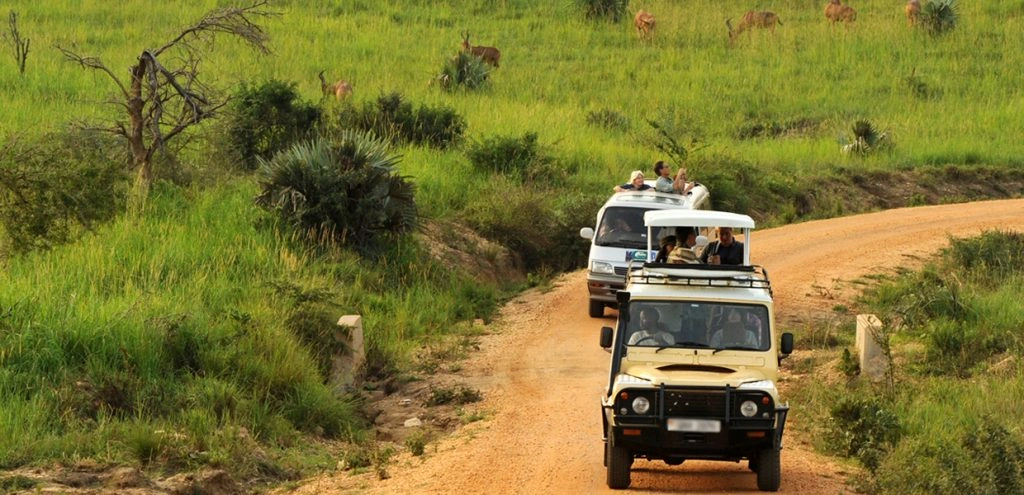
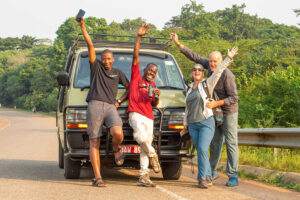
The same applies to Mgahinga Gorilla National Park, Kibale Forest, and the tracks inside Queen Elizabeth National Park where game drives take you across open savannah and through dense vegetation. For any of these destinations, the Safari Landcruiser is widely regarded as the gold standard of safari transport. Its elevated seating gives passengers excellent game-viewing angles, the pop-up roof enables photography without obstruction, and its 4×4 drivetrain handles whatever the terrain throws at it. At Pick & Transfer, our Safari Landcruiser is the most requested vehicle for gorilla trekking transfers, and for very good reason.
Safety Is the Priority — Especially on Remote Routes
One of the most serious arguments for 4WD on Uganda safaris is driver and passenger safety. When you are travelling 400 to 500 kilometres from Kampala to a remote park, the consequences of a vehicle breakdown are significant. Remote areas have limited mobile signal coverage, few roadside services, and long distances between towns. Getting stranded in an ill-equipped vehicle is not just inconvenient — it can be dangerous.
4WD vehicles are not only more capable on poor roads; they are also more structurally robust and better equipped for emergency situations. They carry higher load capacity for luggage, gear, and supplies, they handle river crossings and flooded sections of road more safely, and they give drivers more control when navigating unexpected hazards. If you want to learn more about planning a safe and well-organised gorilla safari, Kenlink Tours’ guide to gorilla safaris provides expert advice on the full experience from permit booking to park logistics.
Comfort Matters on Long Safari Drives
Uganda’s safari drives are long. The journey from Entebbe or Kampala to Bwindi takes approximately eight to nine hours. The drive to Murchison Falls is around five hours. Queen Elizabeth National Park is roughly six hours from the capital. These are full-day journeys through varied terrain, and the comfort of your vehicle matters enormously for your overall experience.
A well-maintained 4WD such as the Prado Landcruiser TXL offers spacious leather interiors, air conditioning, ample legroom, and smooth handling even on dirt roads — a world apart from what you would experience in a small saloon. For groups travelling together, the Toyota Hiace offers comfortable group seating while still being capable enough for Uganda’s roads. You can browse all available safari vehicles on the Pick & Transfer fleet page to find the best match for your group size and itinerary.
A Professional Driver Makes All the Difference
Choosing the right 4WD is only part of the equation. Having an experienced, locally knowledgeable driver behind the wheel is equally important. Uganda’s rural road network can be confusing for first-time visitors. Signage is limited in many areas, roads can split unexpectedly, and local driving conditions require situational awareness that comes from years of experience.
At Pick & Transfer, all our drivers are professionally trained and deeply familiar with Uganda’s safari routes. They know the best refuelling stops, the optimal departure times to avoid border queues, and the safest ways to navigate the approach roads to every major park. If you are considering a self-drive option, you can also read our detailed guide on car rental tips for gorilla trekking safaris in Uganda before making your decision — and Kenlink Tours also offers a useful self-drive gorilla safari resource for independent travellers.
Plan Your Safari Transport Early
Uganda’s peak safari seasons — June to September and December to February — see high demand for reliable 4WD vehicles. The Uganda Wildlife Authority recommends booking gorilla permits at least three to six months in advance, and your transport planning should follow the same timeline. Waiting too long risks being left with poorly maintained alternatives that do not meet the demands of the journey.
Whether you are planning a gorilla trekking safari in Bwindi, a game drive in Queen Elizabeth, or a cross-border adventure from Kigali (read our full guide on gorilla trekking safaris in Bwindi starting from Kigali), your 4WD vehicle is the foundation of the entire experience. A reliable, purpose-built safari vehicle does not just get you there — it ensures you arrive safely, comfortably, and ready for the adventure of a lifetime.
Book your safari 4WD transfer today with Pick & Transfer, or contact our team to discuss your specific safari itinerary and vehicle requirements. We have been connecting travellers to Uganda’s wild places since 2006, and we are ready to make your safari seamless from start to finish.
Related posts
Leave a Comment