
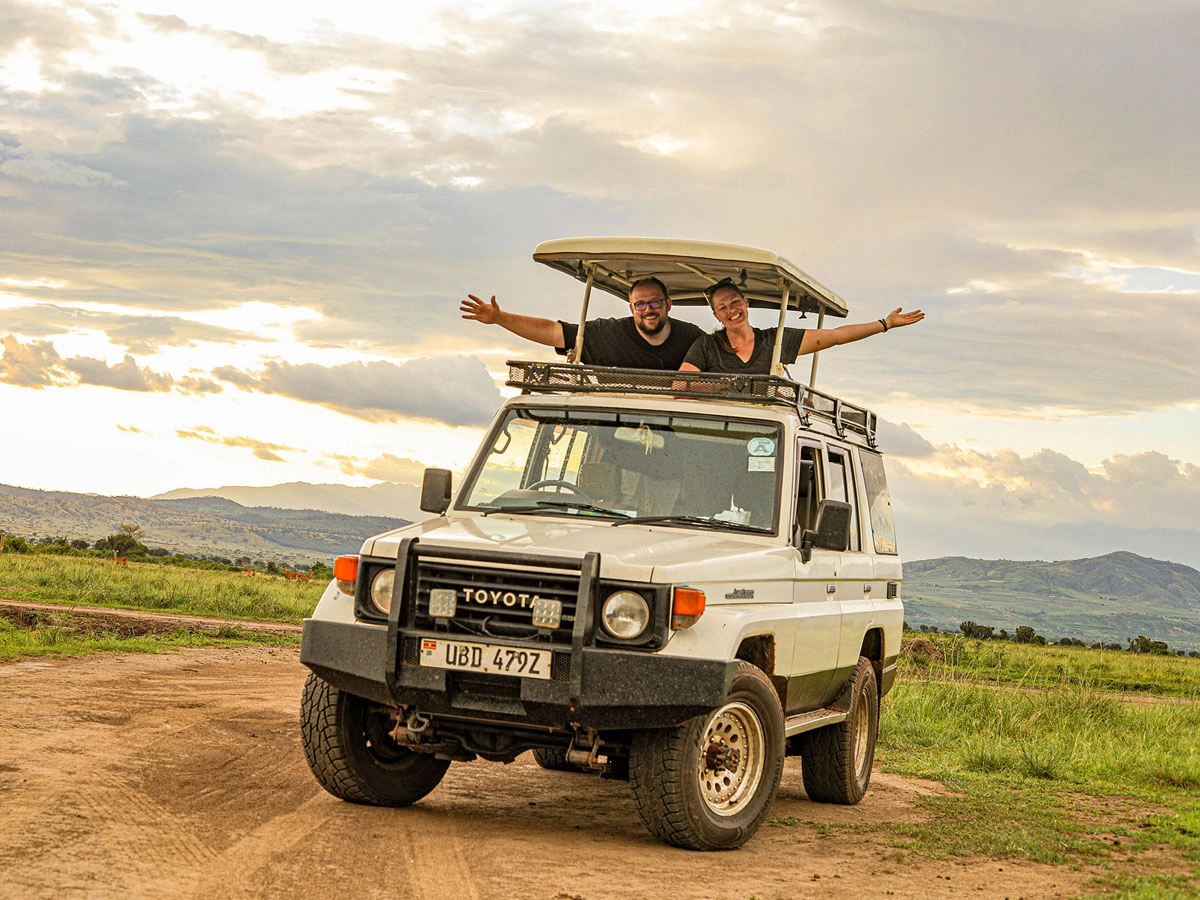
How to Plan a Self-Drive Safari in Uganda. Uganda, affectionately known as the Pearl of Africa, is one of the most extraordinary safari destinations on the continent. Nowhere else in the world can you track mountain gorillas at dawn, watch tree-climbing lions in the afternoon, and fall asleep to the sound of hippos on a crater lake — all within a single well-planned trip. And the best part? You can experience all of it at your own pace on a self-drive safari.
Planning a self-drive safari in Uganda is deeply rewarding, but it requires careful thought and preparation. At Pick & Transfer, we have spent nearly two decades helping travellers navigate the roads of East Africa safely and comfortably. This guide walks you through everything you need to know before you set off.
1. Choose the Right Time to Visit
Timing is everything on a Uganda safari. The country has two dry seasons — from June to September and from December to February — which are widely considered the best periods for self-drive travel. During these months, the trails to Bwindi Impenetrable Forest are less slippery, the parks are easier to navigate, and wildlife congregates around water sources, making sightings far more predictable.
The wet seasons from March to May and October to November bring lush, green landscapes that are stunning for photography, but dirt roads into remote parks can become impassable without the right vehicle. If you are a first-time self-driver in Uganda, plan your trip during the dry season for the smoothest experience.
2. Plan Your Route and Key Destinations
Uganda is compact but extraordinarily diverse. A successful self-drive safari depends on a clear route that balances drive times with wildlife experiences. Some of the most popular destinations include:
Bwindi Impenetrable National Park — home to nearly half of the world’s remaining mountain gorillas, this is the crown jewel of any Uganda safari. It is located approximately 530 kilometres southwest of Kampala.
Queen Elizabeth National Park — famous for its tree-climbing lions in Ishasha, boat safaris on the Kazinga Channel, and diverse ecosystems ranging from savannah to wetlands.
Murchison Falls National Park — Uganda’s largest park, where the Nile explodes through a narrow gorge in a dramatic display. Expect elephants, giraffes, lions, and Nile crocodiles.
Kibale Forest National Park — the best destination in Africa for chimpanzee tracking, with an exceptionally high encounter success rate.
Lake Mburo National Park — a shorter drive from Kampala and ideal for a weekend self-drive, with zebras, hippos, and impalas.
For those combining Uganda with Rwanda, Kenlink Tours offers excellent context on Uganda safari experiences and what to expect from each destination, which can help you prioritise your itinerary effectively.
Experienced travellers recommend spending at least seven to ten days on a complete Uganda self-drive circuit. The classic southwestern loop — Kampala to Lake Mburo, Queen Elizabeth, and Bwindi — is one of the most popular and rewarding routes.
3. Select the Right Vehicle
This is the single most important decision you will make for a Uganda self-drive safari. Many parks, especially Bwindi, Kidepo Valley, and parts of Queen Elizabeth, have unpaved, hilly, and sometimes muddy roads that simply cannot be navigated in a standard saloon car.
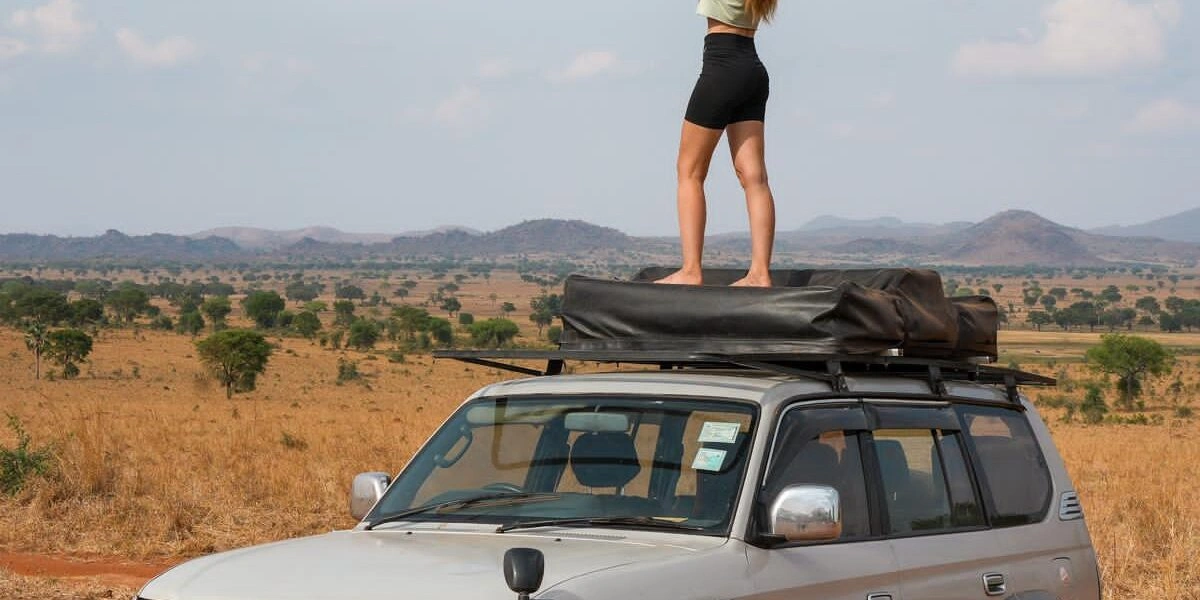
A 4×4 SUV is strongly recommended — vehicles like the Toyota Land Cruiser Prado, RAV4, or Mitsubishi Pajero offer the ground clearance, traction, and engine power needed for Uganda’s terrain. For longer expeditions, a rooftop-tent equipped 4×4 eliminates accommodation costs and opens up remote areas that most travellers never reach.
Explore our Our Fleet page to view the full range of vehicles available for hire — from comfortable safari 4×4s to spacious minibuses ideal for family groups or small travel parties. All our vehicles are well-maintained and road-ready for Uganda’s varied conditions.
If you prefer the freedom of driving with backup support, we also offer professional transfer services with experienced drivers who know every road, shortcut, and park gate across Uganda and the wider region.
4. Book Your Permits Well in Advance
Gorilla trekking permits are the most sought-after and limited activity in Uganda, and they sell out months in advance. Each permit costs $800 per person for foreign non-residents and allows you one precious hour with a gorilla family in the wild. Permits are issued by the Uganda Wildlife Authority, and booking through an official channel or registered operator is essential.
Chimpanzee tracking permits in Kibale Forest cost between $100 and $250 per person. Both gorilla and chimpanzee permits have limited daily slots, so the earlier you book, the more flexibility you will have in planning the rest of your route around your permit dates.
For a broader breakdown of what Uganda safari experiences cost — from park entry fees to accommodation — the Kenlink Tours guide on how much a Uganda safari costs is a practical and transparent reference.
5. Know the Road Rules and Safety Tips
Uganda drives on the left side of the road, and speed limits are posted on all major highways. However, road conditions vary enormously — from smooth tarmac on the Kampala–Masaka highway to deeply rutted murram tracks inside national parks after rainfall.
A few golden rules for self-driving in Uganda: avoid driving after dark, especially in rural areas and on park roads where wildlife crossings are common. Always carry enough fuel before entering a national park, as stations inside are rare or non-existent. Keep a first aid kit, spare tyre, tow rope, and a physical map or offline navigation app in the vehicle at all times.
6. Pack Smart and Prepare for All Conditions
Uganda’s altitude and climate can shift dramatically between regions. Pack lightweight, neutral-coloured clothing for game drives, a waterproof jacket for highland forest treks, good hiking boots for gorilla trekking, and sun protection for open savannah drives. Binoculars are essential. A power bank and a universal adapter will keep your devices charged across lodges and campsites.
Ready to Start Planning?
A self-drive safari in Uganda is one of Africa’s great adventures — and the freedom of the open road makes the experience entirely your own. Whether you are heading deep into Bwindi for gorillas, cruising through Queen Elizabeth at sunrise, or setting up camp beside the Nile in Murchison Falls, the journey is as extraordinary as the destination.
Pick & Transfer has been connecting travellers to Uganda’s most incredible places since 2006. We offer reliable, well-maintained vehicles, experienced drivers, airport transfers, and cross-border logistics across Uganda, Rwanda, Kenya, and South Africa.
Book your transfer or vehicle today and let us help you plan a safari you will never forget. For any questions, our team is always ready — contact us here.
Related posts
Leave a Comment