
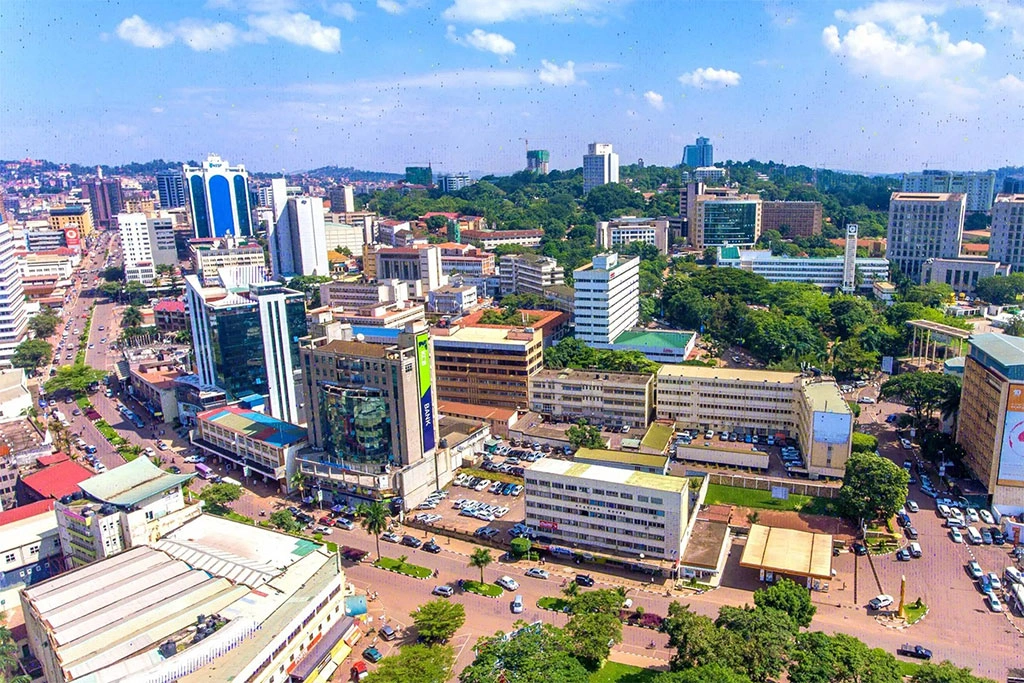
Kampala City is the energetic heart of Uganda — a place where deep history meets fast-growing urban life, and tradition blends naturally with modern ambition. Sitting along the northern shores of Lake Victoria, Kampala is not only Uganda’s capital but also its political, cultural, and commercial center. For travelers, business visitors, and residents alike, Kampala offers a dynamic experience shaped by its people, geography, and rich past.
For Pick and Transfer, Kampala is more than a destination; it is the primary gateway for exploring Uganda. Whether you are arriving through Entebbe International Airport, traveling for business, or beginning an upcountry safari, Kampala plays a central role in movement, logistics, and connection across the country.
Location and Geography of Kampala City
Kampala is located in central Uganda, about 40 kilometers north of Entebbe International Airport. The city spreads across a series of rolling hills overlooking Lake Victoria, Africa’s largest freshwater lake. These hills give Kampala its unique character, scenic viewpoints, and naturally divided neighborhoods.
The city lies at an altitude of approximately 1,200 meters above sea level, providing a relatively mild climate compared to many tropical capitals. Rainfall is spread throughout the year, supporting lush vegetation and green spaces that soften the urban environment.
Kampala’s strategic position has always made it a hub for trade, administration, and transportation, linking Uganda’s regions with East Africa as a whole.
The Origin of Kampala’s Name
The name “Kampala” comes from the phrase “Kasozi ka Impala,” meaning “the hill of antelopes.” In the 19th century, impalas grazed freely on the hills that now form the city center. British colonial administrators shortened the name to Kampala, and it has remained ever since.
This origin reflects Kampala’s transformation — from open grassland and hunting grounds for Buganda royalty to a vibrant metropolis with over two million residents in the greater metropolitan area.
Kampala Before Colonial Rule
Long before colonial influence, Kampala was part of the powerful Buganda Kingdom, one of the most organized and influential traditional kingdoms in East Africa. The Kabakas (kings of Buganda) ruled from various hills, establishing administrative and cultural centers across the region.
The Buganda Kingdom valued centralized leadership, clan systems, trade, and agriculture. Fishing from Lake Victoria, farming bananas (matooke), and regional trade supported early settlements around present-day Kampala.
Many of Kampala’s hills — such as Mengo, Rubaga, and Namirembe — were associated with royal residences, spiritual institutions, and decision-making centers of the Buganda Kingdom.
Colonial Kampala and British Influence
Kampala entered a new chapter in 1890 when British colonial administrators selected it as a strategic military and administrative post. Captain Frederick Lugard established a fort on Old Kampala Hill, marking the beginning of structured colonial development.
During British rule, Kampala evolved into a planned administrative town. Roads, rail connections, government offices, schools, and hospitals were established. The Uganda Railway strengthened Kampala’s role as an economic center linking inland Uganda to the East African coast.
However, colonial development largely favored European and Asian communities, while African populations were pushed toward informal settlements. These planning inequalities would shape the city’s growth patterns well into the future.
Kampala After Uganda Got Independence
Uganda gained independence in 1962, and Kampala officially became the national capital. Early post-independence years were optimistic, with expansion in education, infrastructure, and public institutions.
The 1970s and early 1980s were difficult periods for Kampala due to political instability. Many businesses collapsed, infrastructure deteriorated, and skilled professionals left the country. Despite these challenges, Kampala remained resilient.
Since the late 1980s, Kampala has experienced steady recovery and rapid growth. Today, it is one of East Africa’s fastest-growing cities, driven by trade, real estate, technology, tourism, and transportation services.
The Seven Famous Hills of Kampala
Historically, Kampala was built on seven key hills, each with unique significance. Although the city has expanded far beyond them, these hills remain symbolically important.
Old Kampala Hill
This is the site of the original British fort and later the headquarters of early colonial administration. Today, it is home to the iconic Uganda National Mosque.
Mengo Hill
Mengo is the traditional seat of the Buganda Kingdom and home to the Kabaka’s Palace. It remains an important cultural and political center.
Namirembe Hill
This hill hosts Namirembe Cathedral, the oldest Anglican cathedral in Uganda.
Rubaga Hill
Rubaga is home to Rubaga Cathedral, the seat of the Roman Catholic Church in Uganda.
Nsambya Hill
Historically associated with early Catholic missions and medical services.
Nakasero Hill
A major commercial and residential hub, home to State House and many embassies.
Kololo Hill
Once a quiet residential area, Kololo is now a prime neighborhood known for diplomacy, business, and nightlife.
Culture and People of Kampala
Kampala is one of the most culturally diverse cities in East Africa. Although it sits within Buganda land, the city attracts people from every region of Uganda and beyond. This diversity shapes the city’s language, cuisine, fashion, and daily rhythm.
Luganda and English are the most widely spoken languages, but you will hear Swahili, Runyankole, Luo, Arabic, Hindi, and many others across the city.
The people of Kampala are known for their warmth, resilience, humor, and entrepreneurial spirit. Informal businesses thrive alongside modern offices, creating a city that feels alive at every hour.
Economy and Business in Kampala
Kampala is Uganda’s economic engine. The city accounts for a significant share of the country’s GDP and hosts headquarters of major companies, banks, NGOs, and government institutions.
Key economic sectors include:
- Trade and commerce
- Transportation and logistics
- Tourism and hospitality
- Construction and real estate
- Finance and mobile banking
- Information technology and startups
Markets like Owino (St. Balikuddembe Market) and Nakasero Market supply food and goods to the entire metropolitan area. Kampala’s informal economy plays a huge role in employment and innovation.
For Pick and Transfer, Kampala’s role as a transport nucleus is crucial, as it connects travelers to airports, border points, hotels, offices, and upcountry destinations.
Transportation and Mobility in Kampala
Transportation in Kampala reflects the city’s rapid expansion. The road network connects major suburbs, commercial districts, and satellite towns such as Wakiso, Mukono, and Entebbe.
Common modes of transport include:
- Private vehicles
- Taxis (minibuses)
- Boda-bodas (motorcycle taxis)
- Corporate and airport transfers
Traffic congestion is a defining challenge, especially during peak hours. Reliable, professional transfer services have become essential for visitors, executives, and travelers who value time, safety, and comfort.
Pick and Transfer plays a key role in providing dependable transport solutions for airport transfers, city movements, hotel pickups, and cross-border or upcountry travel.
Major Attractions in Kampala City
Uganda National Mosque
Located on Old Kampala Hill, this mosque offers panoramic views of the city and stands as a symbol of religious diversity.
Kabaka’s Palace and Idi Amin Torture Chambers
A historical site that reflects both Buganda royalty and Uganda’s complex political past.
Uganda Museum
The oldest museum in East Africa, preserving Uganda’s cultural, archaeological, and natural heritage.
Namirembe and Rubaga Cathedrals
These iconic religious landmarks also offer beautiful viewpoints over Kampala.
Independence Monument
A symbol of Uganda’s freedom, located in the city center.
Food, Nightlife, and Entertainment
Kampala is famous for its lively social scene. The city offers a wide range of dining experiences, from roadside food stalls to international fine dining.
Popular local foods include matooke, rolex (chapati with eggs), luwombo, grilled meat, and fresh fish from Lake Victoria.
Nightlife thrives in areas such as Kololo, Ntinda, Bugolobi, and Kabalagala, with bars, lounges, live music, and cultural performances operating late into the night.
Education and Institutions
Kampala hosts some of the country’s most important educational institutions, including Makerere University, once considered one of Africa’s finest universities. Numerous international schools, technical institutes, and training centers attract students from across the region.
The city also houses major hospitals, research centers, and diplomatic missions, further strengthening its regional importance.
Climate and Best Time to Visit Kampala
Kampala experiences a tropical climate moderated by altitude. Temperatures generally range between 18°C and 28°C throughout the year.
The city receives two main rainy seasons:
- March to May
- September to November
Dry months are ideal for city tours, business travel, and road transfers. Even during rainy seasons, travel remains possible with proper planning and reliable transport arrangements.
Challenges Facing Kampala City
Like many fast-growing cities, Kampala faces challenges including traffic congestion, informal settlements, drainage issues, and pressure on public services. However, ongoing investments in road upgrades, infrastructure development, and city management continue to improve urban life.
The Kampala Capital City Authority (KCCA) plays a central role in urban planning and modernization, working to balance growth with sustainability.
Kampala as a Gateway to Uganda
For most visitors, Kampala is the first major city they encounter after landing at Entebbe International Airport. It serves as the starting point for safaris to Bwindi, Murchison Falls, Queen Elizabeth National Park, Jinja, and beyond.
Efficient transport within and out of Kampala is essential for seamless travel experiences. Professional transfer services ensure smooth airport pickups, city hotel transfers, conference movements, and long-distance journeys.
Pick and Transfer in Kampala City
In a city defined by movement, reliability matters. Pick and Transfer operates at the core of Kampala’s mobility network, providing dependable transportation services built around safety, punctuality, and local expertise.
From airport transfers and corporate travel to city errands and long-distance journeys, Pick and Transfer understands Kampala’s roads, rhythms, and travel needs. Our services help individuals and businesses navigate the city with confidence and ease.
The Spirit of Kampala City
Kampala City is not just Uganda’s capital — it is its heartbeat. A city shaped by kings, colonization, resilience, and renewal, Kampala continues to grow while retaining its cultural soul.
Its hills tell stories of the past, its streets reflect the present, and its people represent the future. Whether you are visiting for business, leisure, or transit, understanding Kampala means understanding Uganda itself.
Related posts



Comments
[…] Hire Services in Kampala. Kampala is Uganda’s capital and economic hub, attracting business travelers, tourists, NGOs, and local […]